• Skip to main content
  • Skip to footer

Stone Aerospace

Smart tools and systems for exploring the frontier

  • Home
  • About us
    • What we do
    • History
    • Design philosophy
  • Projects
    • BEAGLE
    • PARTI-Pucks
    • Thor
    • PROMETHEUS
    • ARCHIMEDES
    • ARTEMIS
      • Description
      • Field notes
      • Photo gallery
    • VALKYRIE
      • Description
      • Field notes
      • Photo gallery
    • ENDURANCE
      • Description
      • Field notes
    • DEPTHX
      • Description
      • Field notes
  • News
  • Employment
  • Contact us
  • Stone Aerospace in One Page

Stone Aerospace

September 14, 2015 By Stone Aerospace

ARTEMIS: Mission: September 14, 2015

Sunday Lab Tours

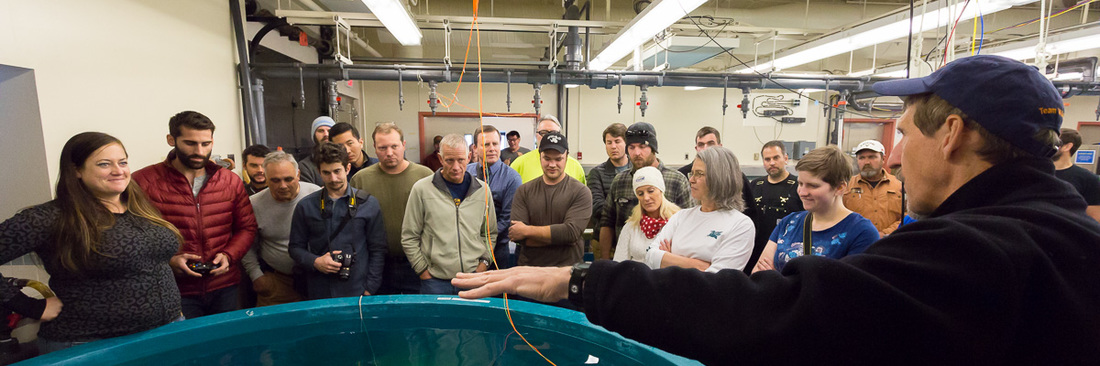
Justin drives Sunfish in the test tank as Bill, Britney, and I explain our robots and science mission to the Sunday Lab Tour group. (photo: Peter Kimball)

McMurdo Station is an amazing place. It exists to enable scientific research, but it only functions because of the hard work of the people here. Machinists, cooks, stewards, administrators, instrument technicians, doctors, helicopter crews, waste managers… there’s a whole city of people here doing various jobs. Each Sunday, the Crary Lab building is opened up to anyone in the McMurdo community who wants to come in and learn about the science that the station is enabling. We had a very satisfying experience sharing our work with folks yesterday – we had an interactive discussion, drove Sunfish around in the test tank (live demo – yikes!), and showed some video from our under-ice tests. We’re looking forward to more Sunday lab tours!
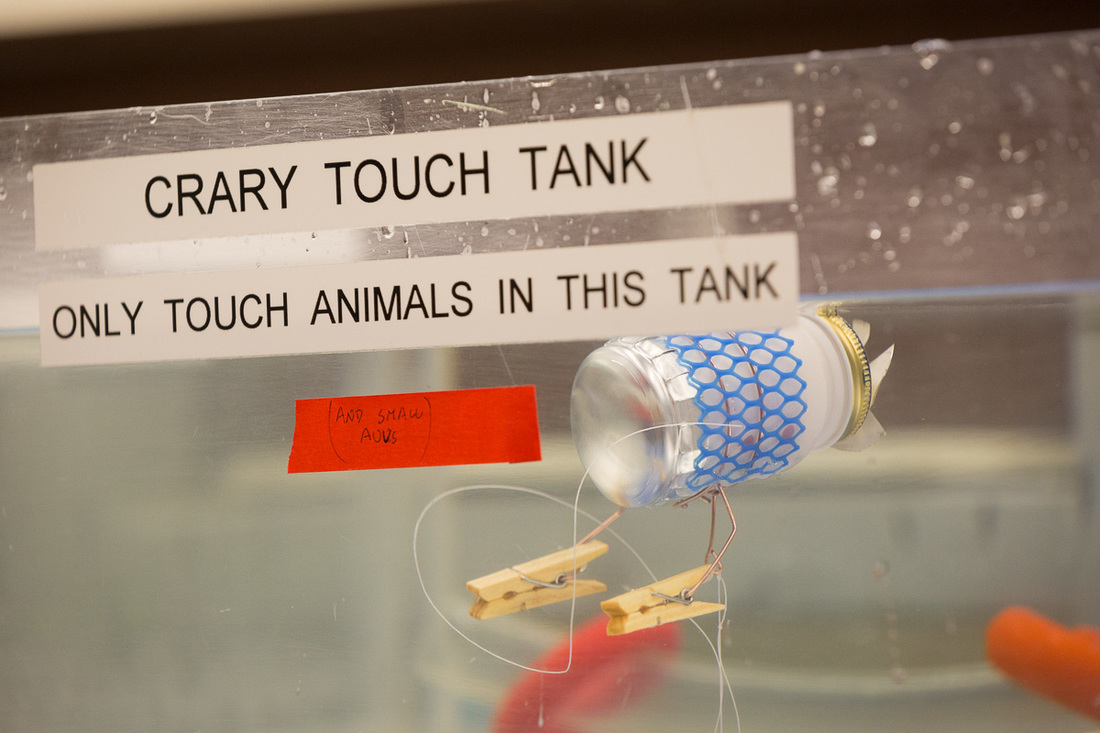
David, one of the Crary Lab Assistants, created this submersible at craft night to leave in the touch tank. When more science parties show up, this tank will contain specimens of the animals they’re studying. (photo: Peter Kimball)

Reporting by Peter Kimball
September 12, 2015 By Stone Aerospace

ARTEMIS: Mission: September 12, 2015

Meanwhile, in Austin…

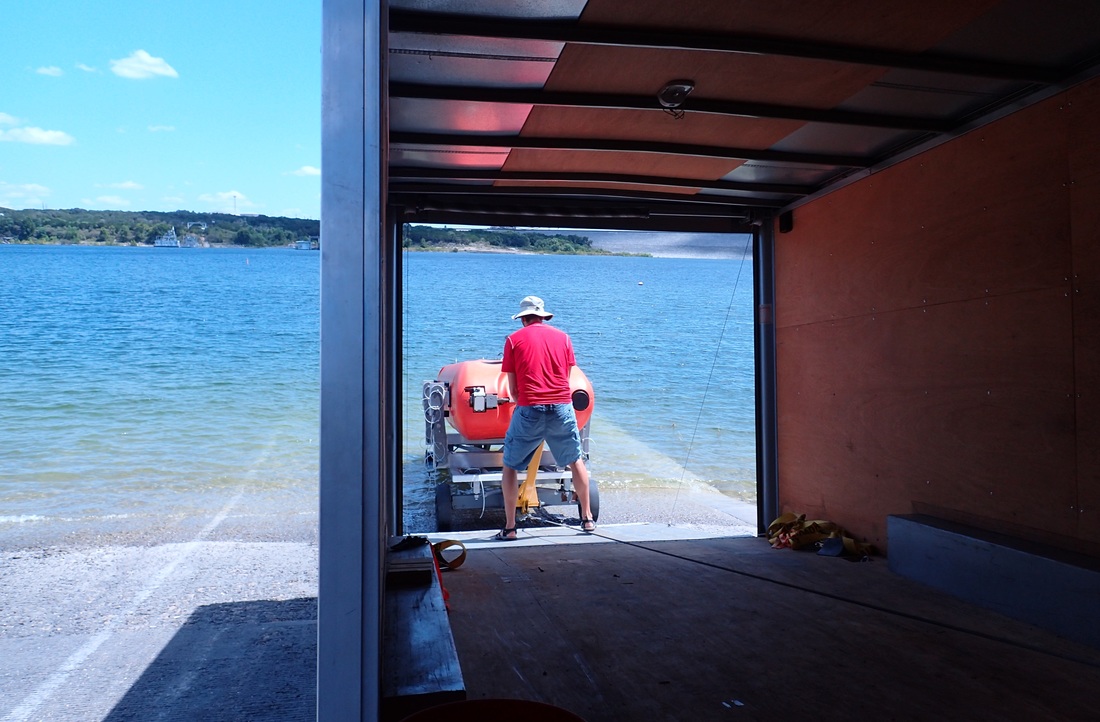
Back at Stone Aerospace headquarters, the remaining members of the ARTEMIS team have been hard at work adding finishing touches and performing final testing with ARTEMIS in preparation for shipping her to Antarctica. We’ve been verifying newly added instrumentation, tuning control, and improving ARTEMIS’s autonomous navigational capabilities. For quick tests, we submerge ARTEMIS in Stone Aerospace’s NBF (Neutral Buoyancy Facility – basically a big tank of salt water), and for more in-depth tests, we bring her to Mansfield Dam, which provides us locally with two things we need: enough water depth to maneuver, and a large boat ramp we can use to move ARTEMIS from the trailer to the water.

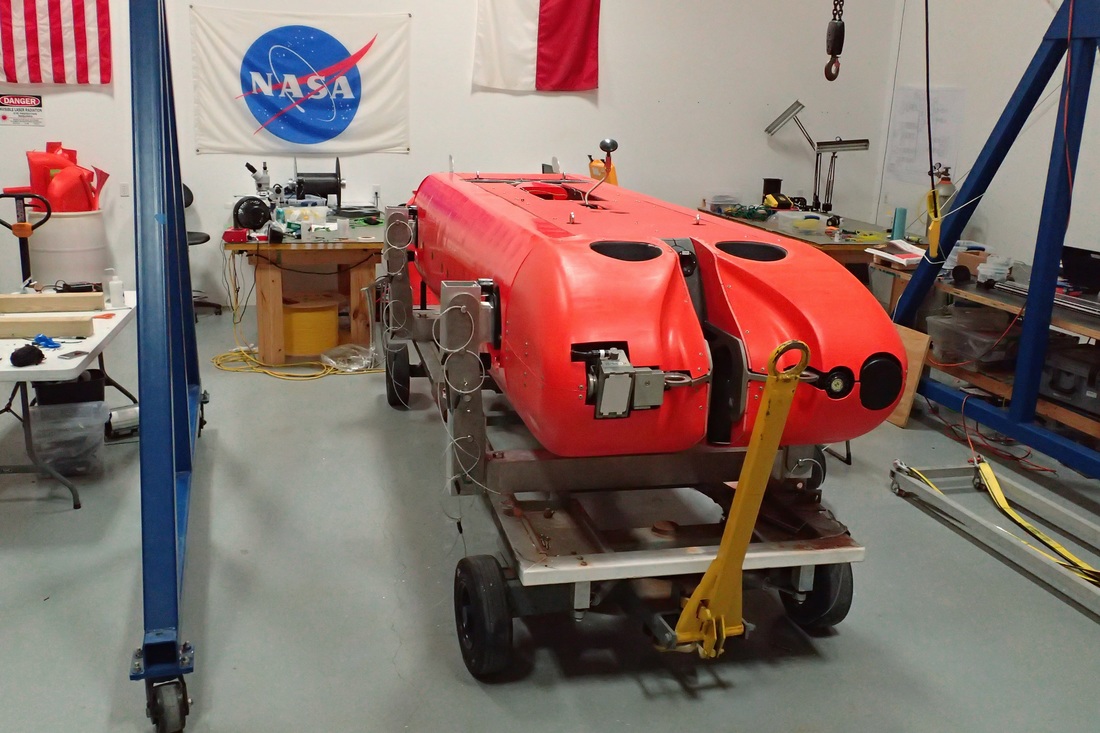
ARTEMIS sits on her transportation cart in lab at Stone Aerospace headquarters. (photo: Evan Clark)

ARTEMIS shipped yesterday (woohoo!) and began her long journey to the ice. ARTEMIS will travel by ground to Port Hueneme, California, and from there she’ll catch a ride on an Air Force cargo plane to Antarctica, along with scientific equipment from other US Antarctic Program projects. Assuming the weather cooperates, ARTEMIS will arrive at McMurdo near the start of October – about the same time as the first wave of the MainBody team (Kristof, Evan, and Brian). The second wave (Mark, Keith), will join us near the end of October and relieve some members of the WinFly team.

ARTEMIS undergoes testing at the Stone Aerospace Neutral Buoyancy Facility in early August. (photo: Evan Clark)

Kristof maneuvers ARTEMIS out of the trailer and into the water in preparation for lake testing. Once ARTEMIS’s weight is held up by buoyant force, the arms on the transportation cart are swiveled away, and she can float free. (photo: Evan Clark)

The WinFly team has been working tirelessly to select a field site for ARTEMIS from several candidate sites on the sea ice near McMurdo Station, and make sure all the logistics are in place to receive the robot once she arrives. They have been scouting the field sites using the Sunfish AUV, as well as a small ROV donated by OpenROV for the expedition (thanks OpenROV!). They hope to gather data on local currents, formation of platelet ice and brash ice (nasty refreezing effects near the ice ceiling which could create features for ARTEMIS’s fiber optic tether to snag on), and ease of access to our scientific targets under the McMurdo Ice Shelf. Once a field site is selected, they will construct the Bot House (a heated mission control structure with a moon pool through which to deploy ARTEMIS), set up our camp on the ice, and prepare for ARTEMIS’s imminent arrival.

She’s on her way, cross your fingers for safe travel!

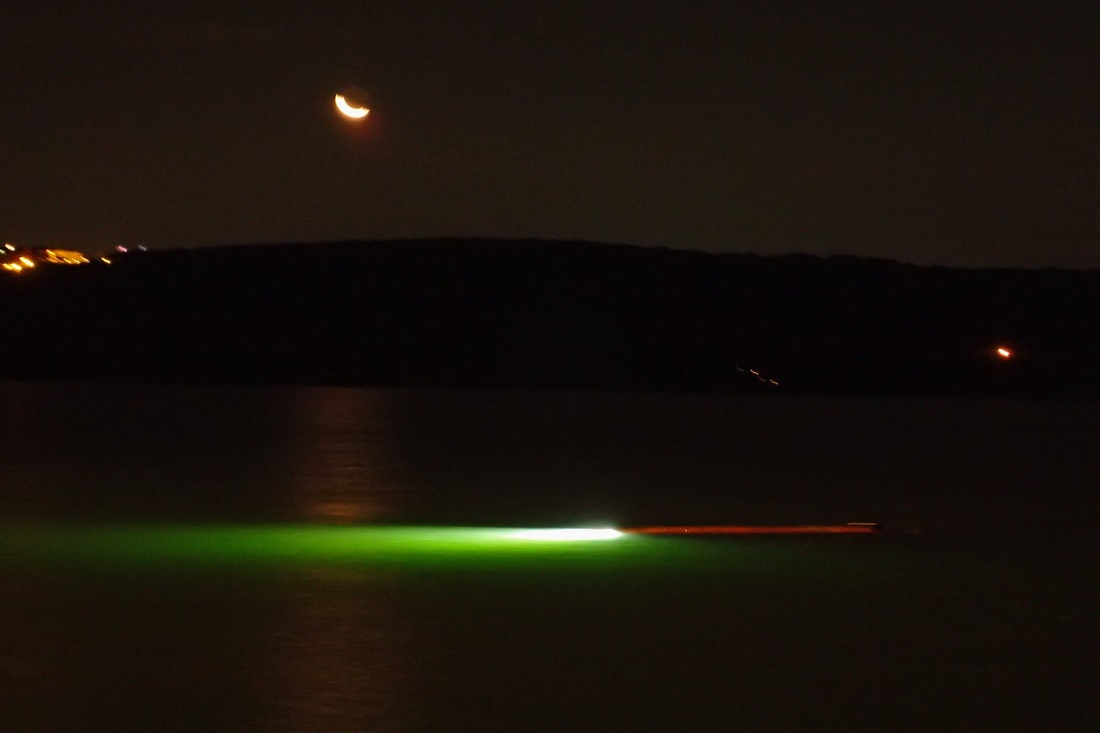
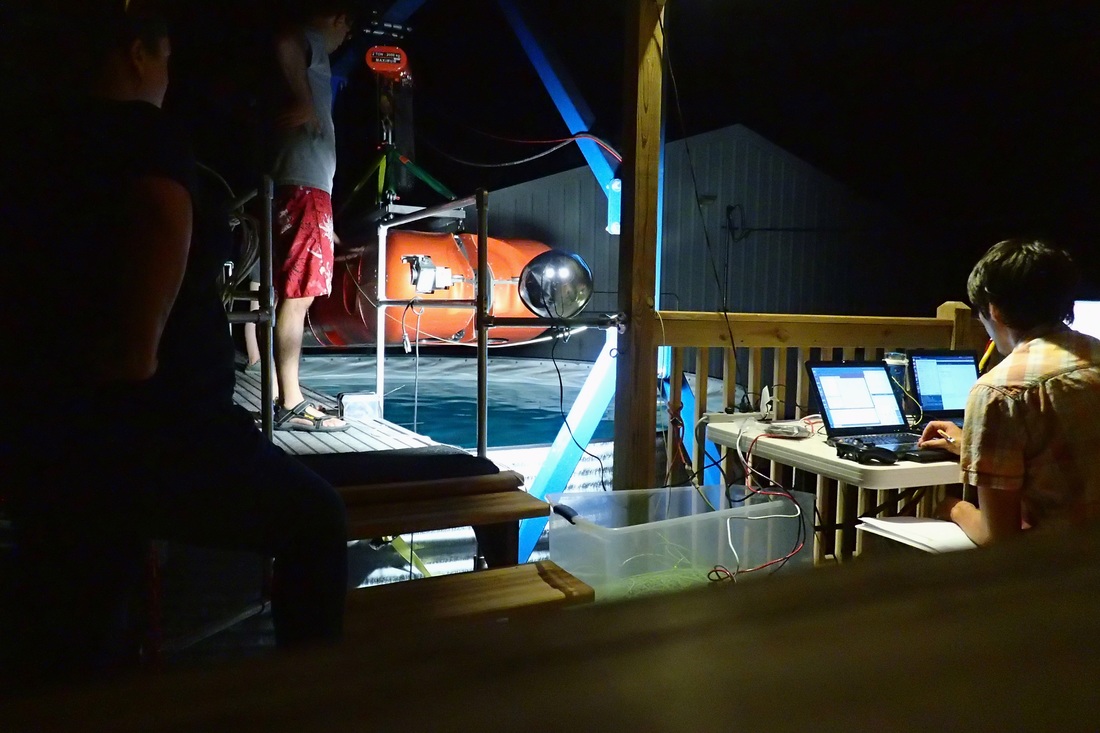
ARTEMIS performs a transect during lake testing at Mansfield Dam over Labor Day weekend. We found it easier to perform testing at night to avoid all the holiday boat traffic! (photo: Evan Clark)

Reporting by Evan Clark

September 12, 2015 By Stone Aerospace

ARTEMIS: Mission: September 12, 2015

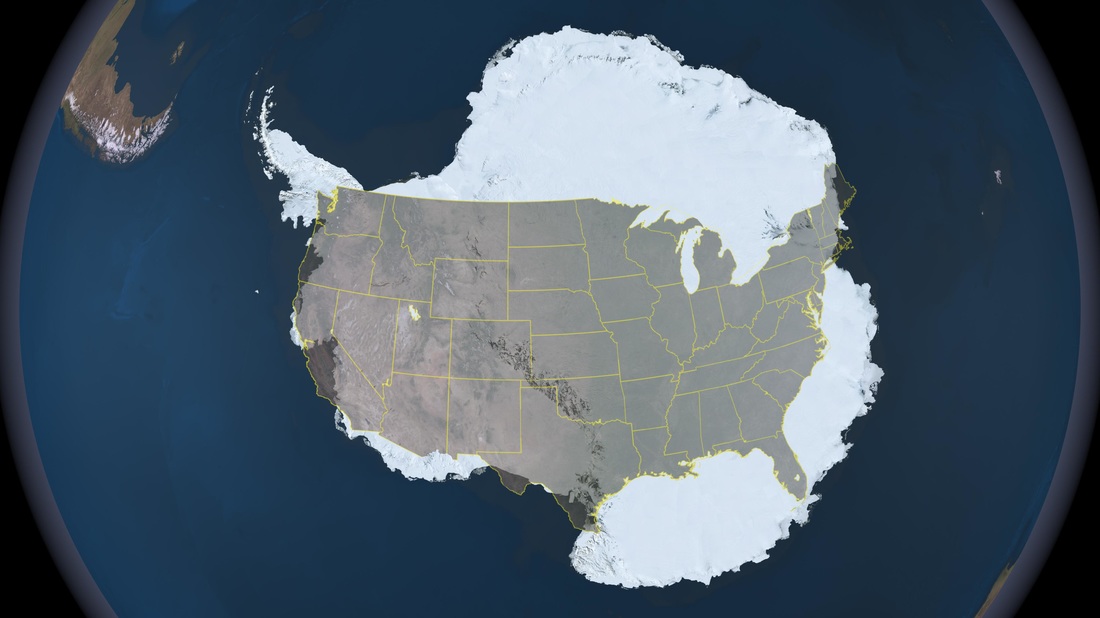
The Size of Antarctica

Antarctica with the US overlaid for size comparison. (image: nasa.gov)

This is a very cool image from a NASA site. Fun fact: they way they’ve overlaid the US, McMurdo Station is very close to Austin, TX – Stone Aerospace Headquarters.

Reporting by Peter Kimball

September 10, 2015 By Stone Aerospace

ARTEMIS: Mission: September 10, 2015

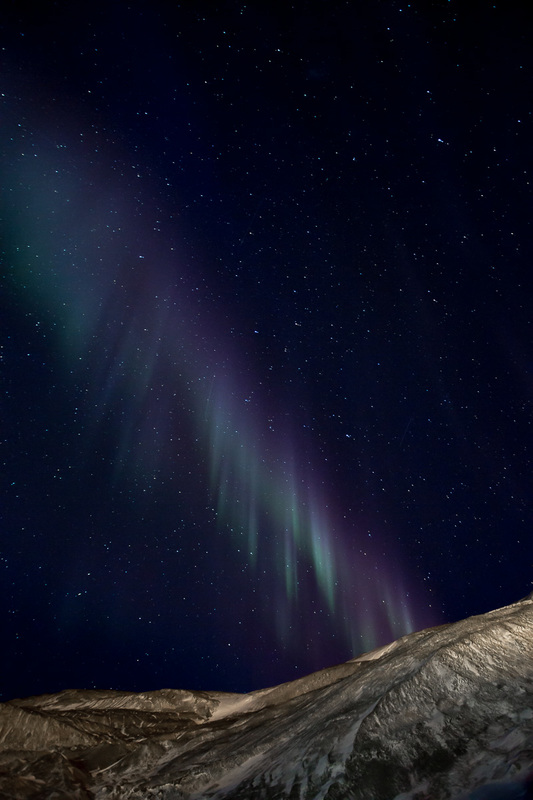
Aurora Australis

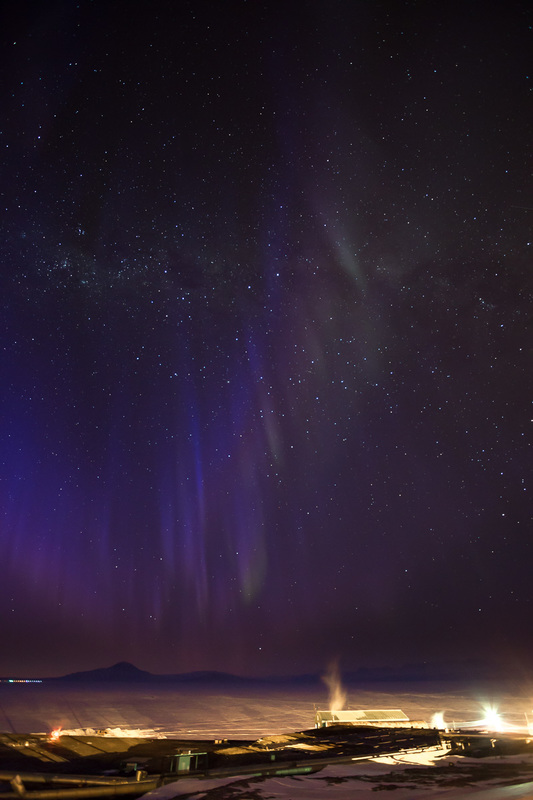
Yesterday was already unbelievably wonderful due to our Sunfish tests under ice. But it got even better… I got back to the dorm at about 11:30 pm (after blogging!), and Justin informed me that aurora were visible outside. I was super tired, but as I mentioned in my camera gear post, this is a play-to-win situation, so I grabbed my tripod from the dorm, went back to lab for my camera, and wandered around outside with my jaw hanging open until about 1am when the cold started getting to me. So, I’m a bit short on sleep today, but the display last night was amazing!

Aurora australis over Mt. Discovery and the Pegasus runway lights. (photo: Peter Kimball)

Aurora australis over the hills north of McMurdo Station. (photo: Peter Kimball)

Here are a few more shots from last night’s aurora display.

Reporting by Peter Kimball

September 9, 2015 By Stone Aerospace

ARTEMIS: Mission: September 9, 2015

Sunfish Under Ice!

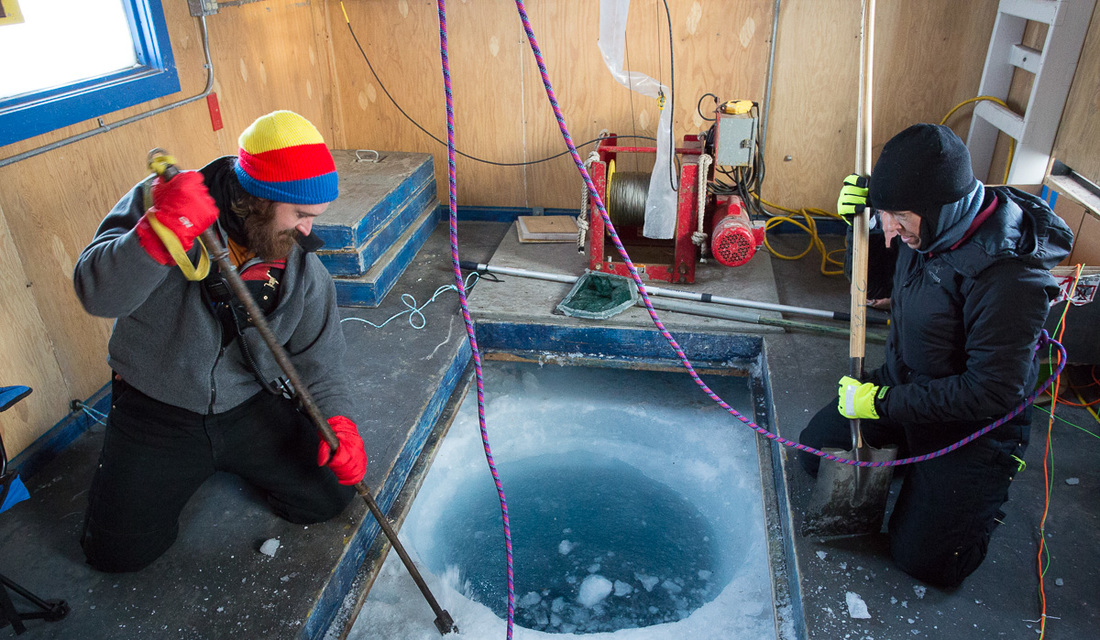
Josh and Vickie clear ice from the drill hole in preparation to launch Sunfish. (photo: Peter Kimball)

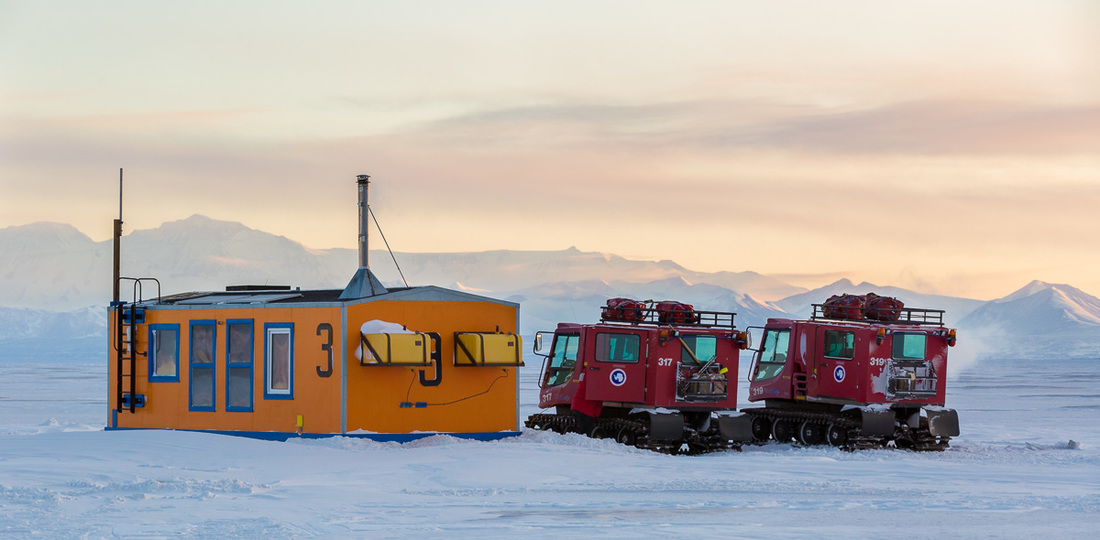
Today was a great day. Sunfish completed her first ever dives under ice. We drove out on the sea ice in our Pisten Bullies to a fish hut loaned to us for the day by another science group. After setting up our computers and safety rigging, we went through our startup checklist and deployed Sunfish into the hole. The first test was to pull Sunfish right back out again. Once we were certain about our ability to recover Sunfish, we sent her back down the drill hole and drove her out under the ice…

The ice is about 2 m thick at this location, so I was surprised to see how much sunlight makes it through to the water. The drifting snow, our hut, and our vehicles all make shadow patterns on the ceiling overhead. In the water, we performed several tests of specific subsystems, and generated a list of things we’d like to improve or implement for our next test. Here are some screen-grabs from Sunfish’s live camera view during today’s glorious first ever dives under ice:

We arrived in the morning to find that the heater in the hut had broken. Normally, the heater is left on to keep the ice hole from refreezing. Without the heater working, the temperature in the hut was the same as outside: -30 F. However, some local seals had kept the hole open all night. Two seals continued to use the hole for breathing throughout our operations today. Protocol when seals show up in the hut is to stop operations and allow them to breathe. Depending on what they’re up to, their breathing can last 5 – 15 minutes. If they show up with a fish and set up shop to eat, it can take much longer before they leave and allow work to resume. Our visitors today only stayed for about 5 minutes at a time. It was really special to see these seals up close in their antarctic home.

The weather was a bit nasty when we left town this morning, but by the time we finished up at the fish hut in the afternoon, things had improved quite a bit. Some carpenters from town even came out and fixed the heater in the fish hut. This was the scene just before we packed up for the day:

Our Pisten Bullies sit beside our borrowed fish hut on sea ice in McMurdo Sound. (photo: Peter Kimball)

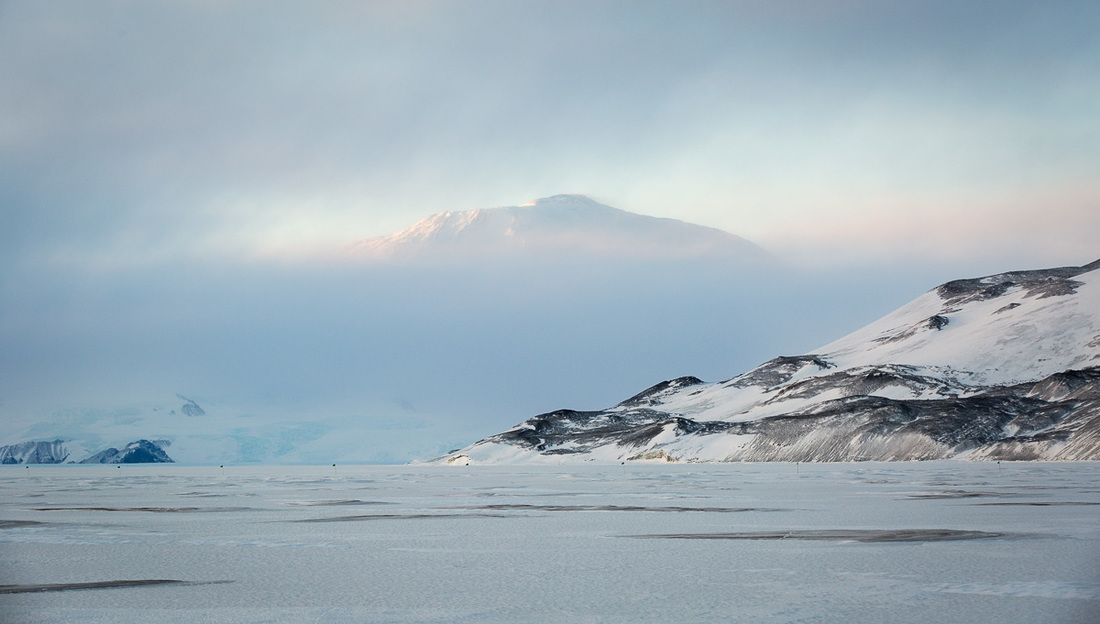
We drove happily back to town after our wonderful day at the fish hut. Driving the Pisten Bullies is super fun, and I got to drive one back to town this evening. Mt Erebus emerged from behind low clouds as we rolled toward town – a beautiful finale to a great day on the ice.

Mt Erebus emerges into view with Hut Point Peninsula and McMurdo Sound sea ice in the foreground. Small green flags mark a USAP sea ice route. (photo: Peter Kimball)

Reporting by Peter Kimball
« Previous Page
Next Page »

Footer

Corporate headquarters:
Austin, Texas

Smart tools for exploring the frontier
  • Facebook
  • Instagram
  • LinkedIn
  • Twitter
  • YouTube

Copyright © 2026 ยท Stone Aerospace, Inc.